
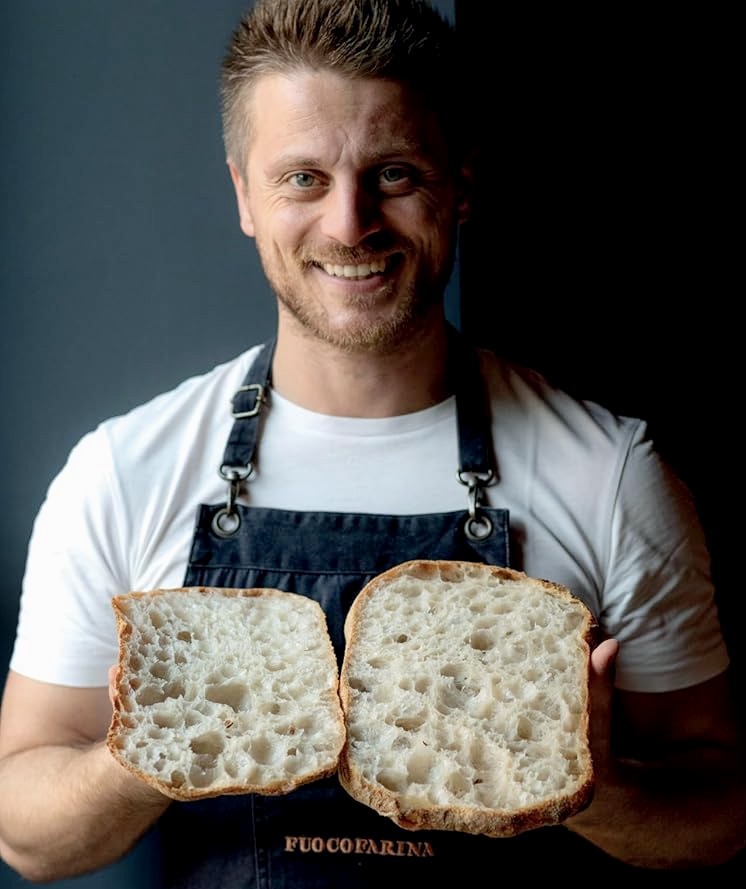
If you long for a fresh loaf of authentic Italian bread made without a lengthy list of chemicals, Mastering Italian Breads: Recipes and Techniques from Italy’s Most Celebrated Breadmaker by Fulvio Marino is a must-have guide. From rustic sourdough bread, pizza, and sweet rolls to traditional holiday treats, Quarto Books’ masterful guide to Italian bread-making, divulges renowned recipes.
What is a testo pan? Can one make delicious homemade bread without using the oven? One will learn a lot about Italian bread-making tools and techniques via this encyclopedic journey filled with interesting facts and Italian bread recipes rooted in tradition. Included, are gorgeous step-by-step color photographs providing visual support on bread folding and shaping techniques.
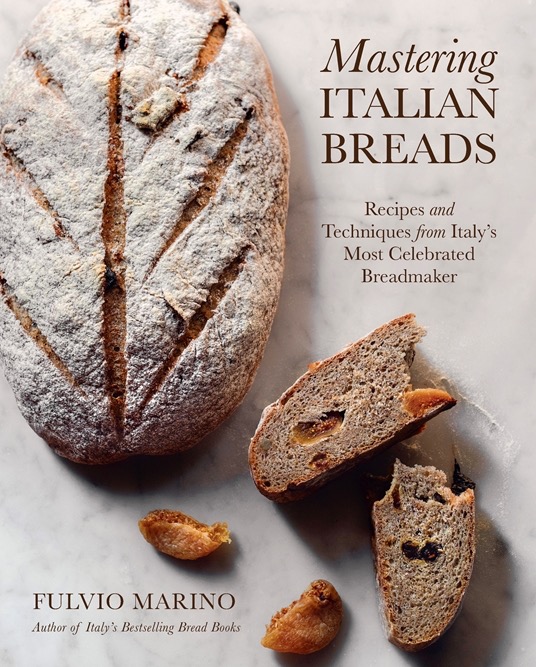
The book’s introductory chapter covers the various wheats and grains of Italy, Italian flour strengths, and their uses in baking, and how to choose flour. Chapter 2 features a detailed listing of regional breads, traditional Italian holiday baked goods, and various types of Italian breads and Italian flatbreads. I initially opted for the Pan Pizza recipe before moving on to the flatbread recipe. Below, is a detailed account of my experience.
A Learning Experience
Pan Pizza
The Pan Pizza recipe required five ingredients, a lot of manual labor and multiple “time outs.” After mixing the required ingredients for a combined total of 25 minutes, I had to “let it rest” in a lightly oiled bowl for 2 hours. After two hours, I folded the dough and let it rest for an hour. When I returned, I had to stretch the dough out in the pan before letting it rest for 30 minutes. After its “nap,” it was time to top the pizza. I topped it with Carbone’s marinara sauce, a pizza seasoning mixture, and mozzarella. Baking time? Fifteen minutes. The result was decent for a first attempt. Since I prefer a crispier pizza, I made another pizza and baked it longer. I definitely preferred the latter, crispier slice.
The verdict? The entire pizza-from-scratch baking process was much too slow for me. So, I decided to try a recipe that didn’t require several periods of “resting” time.
Torta Al Testo (Umbrian Flatbread)
I chose this recipe because I didn’t need to open my oven to make it and I like flatbread. It is a simple recipe, easily cooked using a nonstick cast-iron skillet or griddle. To make it, I used five readily available pantry ingredients: all-purpose flour, baking soda, salt, extra virgin olive oil, and water. The only hurdle was having to translate metric (grams and kilograms) measurements into US measurements. After combining the ingredients I had to “mix vigorously for about 10 minutes ( A great upper arm workout!). Then I covered the bowl with a dampened tea towel and let it rest at room temperature for approximately 30 minutes.
After the “rested” dough had been divided into two disks, I cooked each disk for about 2 to 3 minutes in a nonstick skillet. My flatbread turned out more charred than the flatbread in the book’s photograph. Nevertheless, it was quite tasty. Overall, it was easier than the Pan Pizza recipe.
Minor Challenges
The recipes themselves are accessible, although they assume a degree of adaptability from the reader. Since the recipes are in metric, (grams and kilograms) I had to use a gram conversion chart to assist in translating the book’s measurements into standard US baking measurements.
The reliance on fresh yeast, while appropriate, was a challenging product to locate. After I discovered that fresh yeast is not widely available to non-commercial bakers, I substituted instant yeast to make the pizza recipe.
A resource section featuring ingredient procurement and essential equipment would have been helpful. I didn’t know what a testo pan was so I did a little research. A quick AI search revealed “In Italian cooking, a testo is a traditional flat pan or heavy disc used to cook various regional flatbreads like piadina, testaroli, and torta al testo. Originally made from materials like terracotta or stone, modern versions are typically heavy-duty cast iron or non-stick aluminum. (Visit Tuscan) I did not own a testo pan so I substituted a flat crepe pan to cook the flatbread.
The recipes were more time-consuming than I’d anticipated. There is also a bit of a learning curve for bread baking novices such as myself. Despite the hurdles, this book is a keeper. It has many recipes I’d love to try, such as the ricotta cheesecake recipe.