
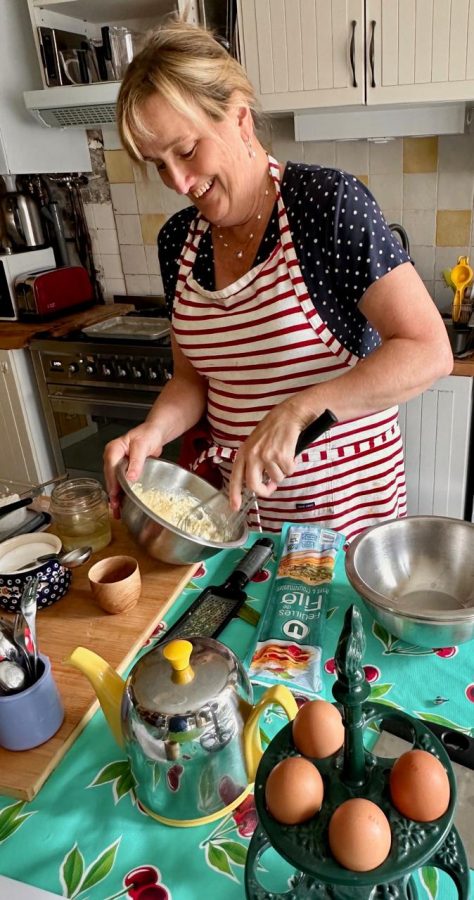
Heading to Brittany? Do yourself an incredible favor, and take one of Cancale-based chef Mary Mary Chappell‘s in-home cooking classes through My Cancale Kitchen. It’s a souvenir you’ll cherish long after your return, and there is no better way to steep in Breton culture than to learn to cook its fresh, unique cuisine.
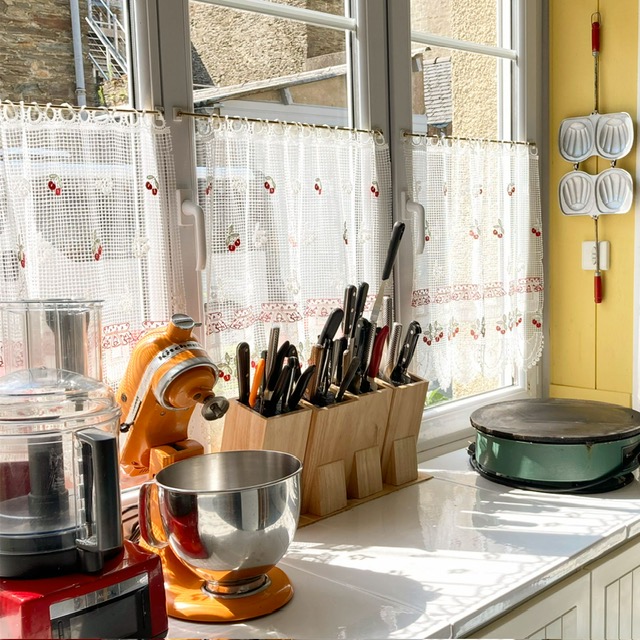
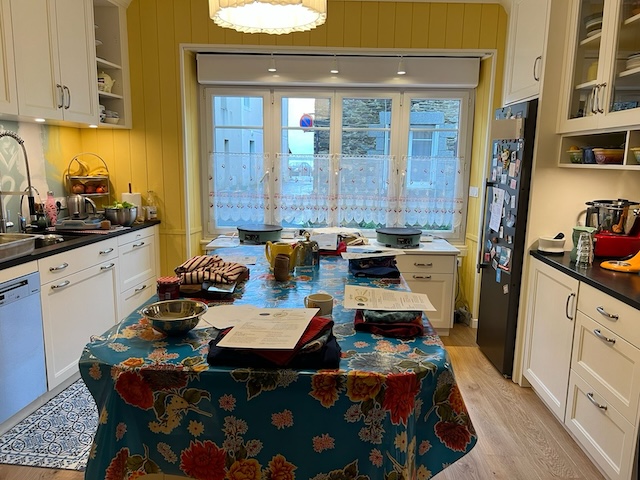
Nestled in the heart of Cancale with a view of ocean, Mary Margaret Chappell has welcomed travelers from around the globe into her cheerful kitchen. Until you can land there yourself, this interview with her will have to suffice to sate your curiosity.
BNNYC: Tell us about your trajectory from child in Richmond, Virginia, to French chef.
Mary Margaret: In Richmond, I spent just about every weekend by the water on Chesapeake Bay. When my French boyfriend took me to visit Brittany, where he planned to study the next year (we had met in the Alps while I was in cooking school in Grenoble, France), I fell hard for the region and its 1700 miles of beaches, rocky cliffs, amd seaside villages along the coast. The first coastal town we visited was Cancale…little did I know that all these years later, I’d be living there! In between I spent several years teaching English as a second language in Rennes, the capital of Brittany, then seven glorious years in the New York food world, first as a pastry chef, then as a food editor. My food editor work took me back to Richmond, then to Los Angeles before I decided it was time to return to France for a kind of working sabbatical.
I rented a house in Cancale, then bought a house in Cancale. I’m not sure what I was thinking when I bought the house, since I had just accepted a job as the editor-in-chief of a magazine in Los Angeles. It turned out to be the right decision, since neither Los Angeles nor the editor-in-chief job were the right fit for me, so I shifted over to a food editor position that I could do remotely. I returned to Cancale for for what I assumed would be a year to figure things out, and I’ve been here ever since, for 19 years.
______
What are the ways that Cancale informs your ingredients and cooking style?
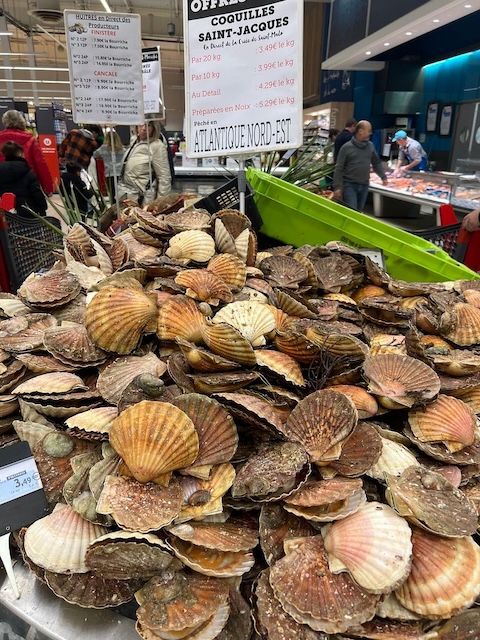
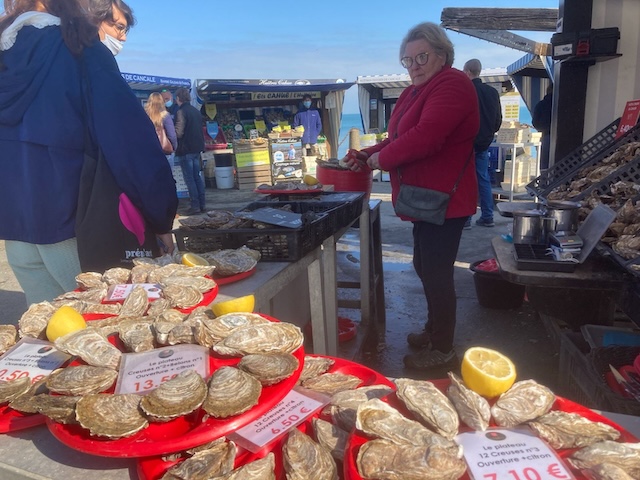
One of the hallmarks of Breton cuisine is its simplicity. It relies on quality and freshness rather than elaborate cooking techniques. I’m lucky to have access to some of the freshest, most delicious ingredients around – seafood caught the day before or sometimes that very day, fruits and vegetables from farms that are just a few miles away, organic grains grown and milled on nearby farms, eggs from a neighbor – and I find that I just want to enhance their flavors a little bit rather than transform them with lots of seasonings or cooking steps.
Did you know you wanted to be a chef as a child, and did you go to culinary school? If not, how did your cooking path develop?
I don’t think I knew I wanted to be a chef as a child, but looking back, I was always begging my mom to let me cook or bake. Please can I make cookies…please can we buy that brownie mix…It wasn’t until I traveled to France on a student exchange program that I really discovered food and cooking, thanks to my host family. After college, that host family helped me find an incredible gig as a teaching assistant in a cooking school, the Lycee Professionnel Clos d’Or in Grenoble, where I could take all the cooking classes I wanted in exchange for helping the English teachers. I also received a pastry arts certificate in New York City.
What were your earliest influences, and who are your most inspiring muses – for example, a relative, another chef, a particular style of cooking, restaurant, or a muse?
My grandmother on my father’s side was a wonderful cook. She made simple, Southern dishes every weekend for the whole family. After that, I would say it was my pastry teacher Gilles. He took me under his wing at the culinary school and to this day, he still gives me advice and recipes to try.
Do you have a favorite chef?
As a matter of fact, one of my favorite chefs is coming to cook with me in May! Sara Moulton, who has done everything from work with Julia Child to running the kitchen at Gourmet magazine to having her own cooking shows, is coming to make Breton galettes and go foraging with me for her show, “Sara’s Weeknight meals” (PBS, Amazon Prime, Tubi, American Public Television). I am over the moon because she’s an amazing cook, and has been a food hero of min for a long time.
Other favorite chefs are some of my other friends! Seriously…I have such admiration for them. There’s Donna Meadows who runs Moxie in Alameda California. She was the pastry chef I worked with at the River Café (Brooklyn) when I first moved to New York and her food is always, always delicious.
What are restaurants doing right and wrong, in your opinion?
What restaurants are doing right: Cooking, and cooking well, for people with special diets. Not that long ago, if you said you were a vegetarian, the only meal you could get in many fine dining establishments was an assortment of side dishes. Nowadays, menus have delicious vegetarian, vegan, and gluten-free options that are appealing to omnivores as well. What restaurants are doing wrong: Forgetting the “hospitality” in the hospitality industry. Snooty service, long waits, and parsimonious portions (I hate it when the wait staff doles out bread slices like they’re gold!) can ruin even the best meal.
What is your Bucket List restaurant?
L’Arpège, a 3 Michelin-starred restaurant in Paris. The chef, Alain Passard, was very gracious and kind to me when I was starting out as a food writer and I’ll never forget it. He’s also just made his restaurant 100% plant-based, and as the former food editor of a vegetarian magazine, I’m curious to taste his food.
Will AI impact the chef and restaurant realm?
AI can be a great brainstorming tool for flavor pairings and recipe ideas. I haven’t been all that impressed by the recipes it generates, though.
What is your favorite dish to cook?
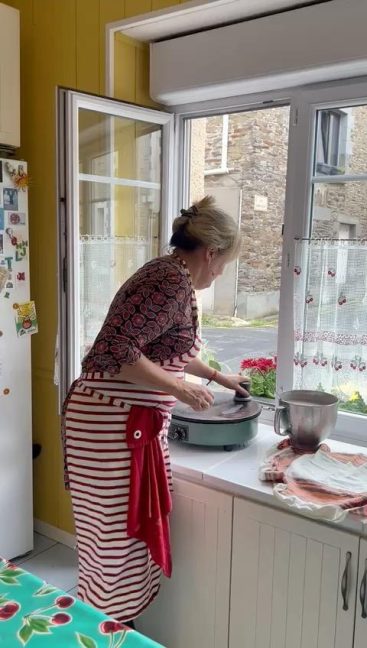
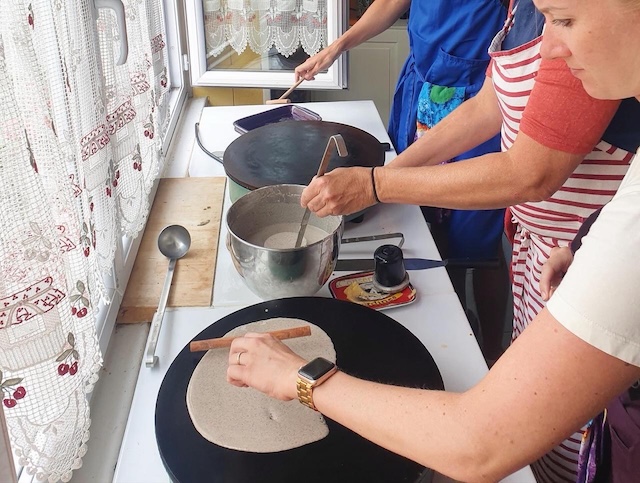
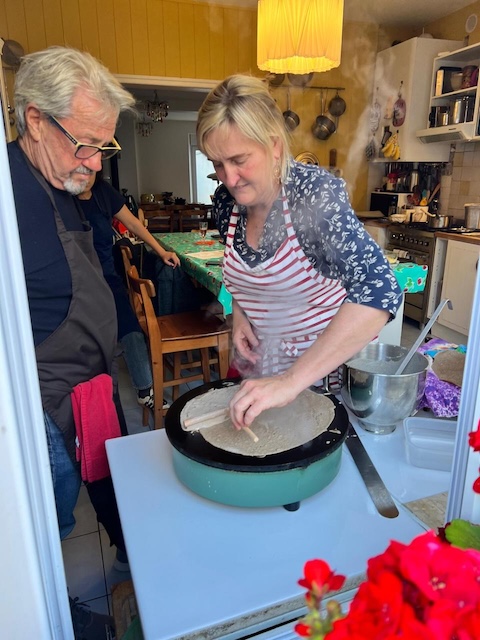
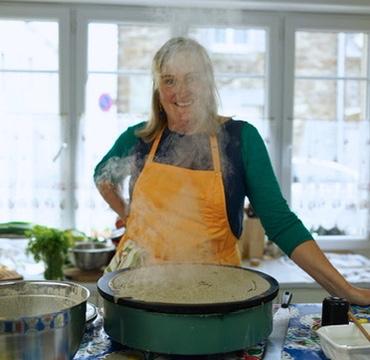
I love, love, love, making Breton buckwheat crêpes (galettes) and teaching others to do so. It was the one food from Brittany I truly missed when I was living in New York.
What is your favorite dish for someone else to cook (for you to eat)?
French fries! A good batch of homemade French fries is a wondrous thing. And when someone else makes them, there’s no spattered oil to clean up in the kitchen.
How do you see your work evolving? Do you have any specific goals, or do you follow your inspiration where it leads you?
Not too long ago, I realized that what I enjoy most is sharing food and cooking knowledge, not just cooking. Basically, I’d rather teach someone how to make a birthday cake than cater a birthday party. I tend to follow my inspiration where it leads me…right now, it has led me to a year-long class in vegetable gardening at the King’s Kitchen Garden in Versailles.
If you weren’t a food writer, what would you be doing instead?
I’d probably be teaching English as a second language. It’s a gig I fell into when I wanted to stay in France, and I ended up loving it.
If you didn’t live in Cancale, where else would you be living right now?
I still miss New York. I’d like to think I’d be living there – only in something a little bigger than the tiny studio I had in Brooklyn!
How long did it take you to speak French fluently and feel comfortable in France? Did you already speak French before moving there?
If you’d asked me when I was 17, I’d have told you I spoke French fluently. Ditto at 21, when I moved back to France. Same thing at 30 when I left France to move to New York. But the reality of it is that my fluency took much longer than I thought. A couple of years after moving to Cancale, I ran into an acquaintance I’d known in my twenties. The first thing she said to me was, “Wow! Your French has gotten so much better!” So I guess it has taken me 20+ years.
What is the toughest thing about being a chef and teaching classes, and what is the best thing about it?
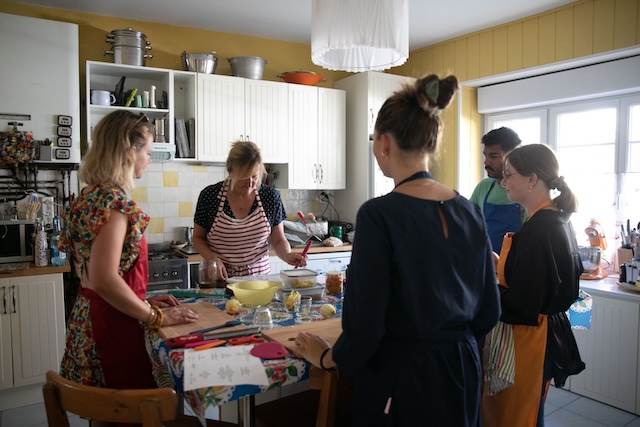
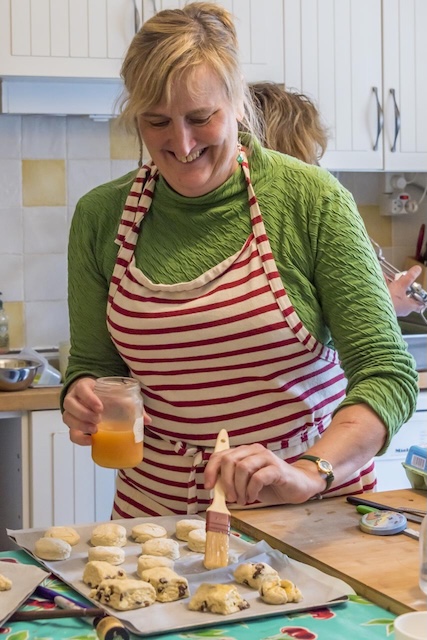
The best thing about teaching is the people I meet. It’s a varied bunch from all over the world and, generally speaking, people who want to take cooking classes are really good, really interesting people. At the end of three hours, we’re usually gabbing away like old friends and swapping stories and recipes.
Shortly thereafter, however, I experience the toughest thing about being a chef and teaching: WASHING THE DISHES. (Luckily, I can stream WFUV, the Fordham university independent radio station, to get me through.)
Do you occasionally get rude or obnoxious clients for classes, and if so, how do you handle that?
I can only think of one occasion: a family of four for a private class was truly awful. I somehow made it through without the husband walking out (apparently, he wasn’t speaking to his wife that day) or the kids setting the kitchen on fire. The moment they left, I poured myself a glass of wine to unwind – even though it was just 2 in the afternoon.
Have you forged any lasting friendships through the classes?
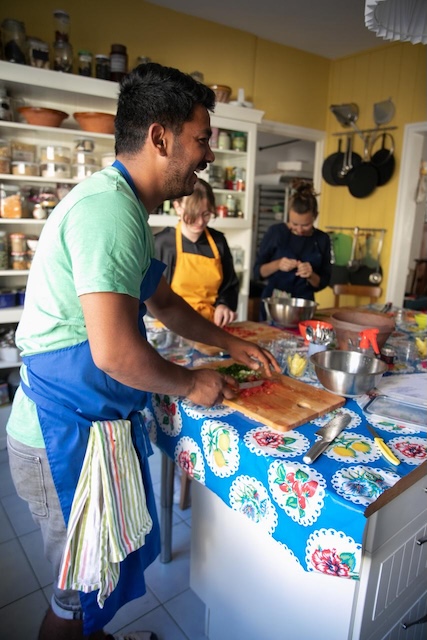
Yes! They’re all around the world, too. And thanks to social media, we can stay in touch very easily.
What is your schedule…Do you work by day or night, or both, and do you work as long as you please or do you slate particular time frames for cooking?
A friend recently joked that I’m ALWAYS working! That’s probably true since at any time on any given day, I am usually cooking, writing, grocery shopping, reading, or talking about food. Heck, even when I’m on a walk or a bike ride, I’m on the lookout for food because I love to forage.
Mornings are generally reserved for writing because that’s when my mind is clearest. When I’m developing recipes, I clear the decks – and the kitchen — for the day. It’s just easier to do it all in one go with no distractions. Classes usually run from 11am to 2pm, but with prep time and clean-up, pretty much take up the whole day.
Do you go through phases where you’ll try different types of dishes, or do you deep-dive into the cuisine you want to fully fathom? How often do you switch things up?
I do the dilettante thing and the deep dive. Like most food lovers, I have a steady stream of recipe ideas coming to me via newspapers, newsletters and social media – and I try a lot of them. Then, I’ll get hooked on or obsessed with an ingredient – lately, it’s been nettles – and try to learn everything I can about cooking it.
How can readers connect with you and your classes in Cancale, and what are your @socials?
I have a website: mycancalekitchen.com that lists all of the classes and tells a little bit about me and offers recipes, too.
I’m also on Instagram @mycancalekitchen.
Editors Note: You must check out the scrumptious recipes on Mary Margaret’s website.
______