
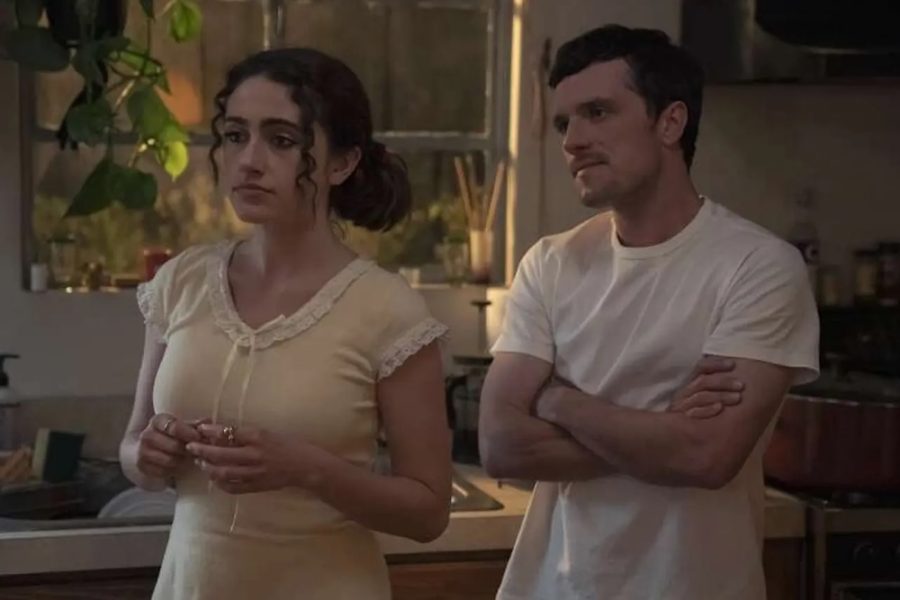
 I think that HBO’s I Love LA’s main romantic relationship depicts an archetype of early 20s relationship that you must desperately escape. Not because it’s bad or wrong, but because it is not right. You are young and you find a relationship you think you can live forever in. After all, it complements you in all the ways that matter. But as you each grow, and start to fill out your own shapes, they may bump into each other.
I like to imagine youth at the beginning of a relationship as each individual being a wet clay vase. When you meet, your silhouettes fit each other perfectly. Where one bulges, the other narrows. Where you fall short, they stand tall. But as we age and go through life, we change shape, with pressure, heat, and time working tirelessly and endlessly. It does things to us that we never could have imagined. It changes us. Suddenly, you are bumping into each other, and where you were once short, you are tall. No longer do your silhouettes complement each other. Instead, each time you bulge with new growth or bump into your partner, you begin to chip and damage each other, little by little.
 In the first episode of I Love LA: Block Her, Maia and Dylan have been together during their post-grad arcs. They live together, and they love each other. But Maia’s increasing ambition leads to her time and attention being siphoned off by her best friend Tullalah, who is now her only client, amidst a messy professional and personal life. In the fifth episode, ironically titled They Can’t All Be Jeremys, we see Dylan express his disgust with Maia’s boss’s lifestyle, a woman Maia has always looked up to. He asserts his dislike of “power couples” and “people who live to work.” The camera cuts back to Maia’s face after he delivers that indictment of her values, awash in anguish and sadness.
Since the season finale aired, I have been keeping a close eye on my TikTok to see what people are saying about this aspect of the show. Every single one has advocated for Maia and Dylan to stay together. Why?
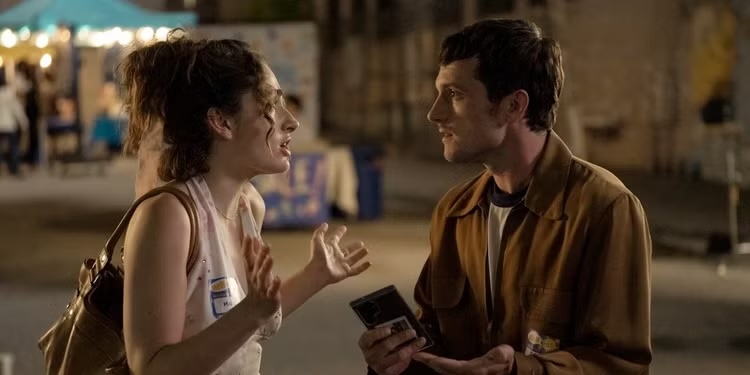 These two characters are not compatible. They have polar opposite ideas about what makes life worth living, their visions for the future, and their overall values. Yes, they have love for each other, but love is not enough on its own to sustain a relationship.
I would argue that Maia and Dylan’s relationship is an archetype many of us go through: outgrowing your partner in your twenties. Through social media, friends, family, and my own experience, this seems to be a normative and formative experience. This type of breakup is the most difficult breakup because nothing is wrong, it’s just not right.
At a crossroads, down one path, you have “choosing love.” You stay with the person you chose in your youth. Maybe you are the breadwinner or vastly more ambitious, like Maia or myself. Maybe your partner begins to listen to manosphere podcasts, lacks personal initiative, or, like Dylan, simply does not want as big of a life as you do. Important decisions are then compromised. Someone is always settling. But still, you choose them and deal with it. Maybe you learn to live side-by-side. Maybe you get a divorce.
Down the other path, you have “choosing yourself.” You have the freedom to make choices without considering another person’s needs, without compromise. There is the potential for a better suited partner, no partner at all, or for lovers in different cities if it strikes your fancy. The world is your oyster because you are free from someone who knows you. And then, once the world’s time, pressure, and heat has made you, formed you, and given you the freedom to grow and expand and bend and live, you will know yourself better, be more familiar with your curves and edges.
Of course, this is not the only truth. Some people reshape together. Some couples absorb the pressure and heat and time and soften back into each other. But this requires a commitment to growing together in a way that I do not think most people in their twenties are able or willing to choose. People are not wrong for wanting less, for choosing stability, for preferring a smaller life that feels manageable and full. But they should find partners who want that too, who are compatible. Some breakups are simply painful choices made without villains, where everyone leaves with something lost.