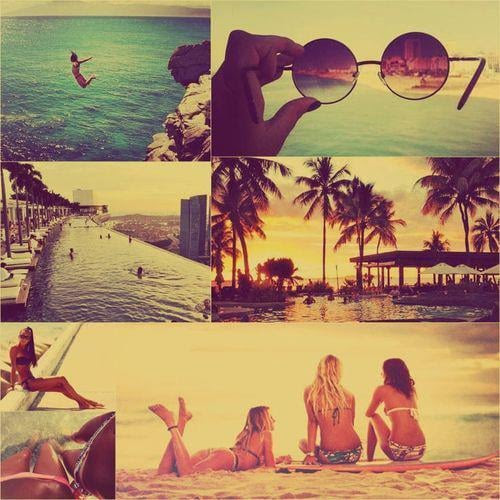
If you spend time on TikTok and your algorithm feeds you content similar to mine, you have almost certainly encountered the resurgence of the 2016 aesthetic. Within this trend, creators use music, photo collages, filters, and nostalgic visual cues to recreate and glamorize the look and feeling of 2016. Videos often feature Pinterest inspired imagery such as messy buns, chokers, faded filters, and stylized Tumblr content that immediately signal the era.
As someone who lived through and fully participated in the original 2016 trends as a young teenager, I find it fascinating how accurately these videos capture not just the aesthetic, but the emotional atmosphere of that time. This revival feels less like a costume and more like a return to a mindset that many creators and viewers deeply miss.
To better understand why this era is resurfacing so strongly in 2026, I interviewed three creators, @ken3kitty, @destinyanai and @toska.archive, who actively engage with and cultivate the 2016 aesthetic, to explore what inspires their content and how they believe it fits with today’s cultural and social media landscape. For this installment of “Is It 2016 or 2026? My FYP is Getting Confused” series, let’s focus on musings from Kenidee @ken3kitty.
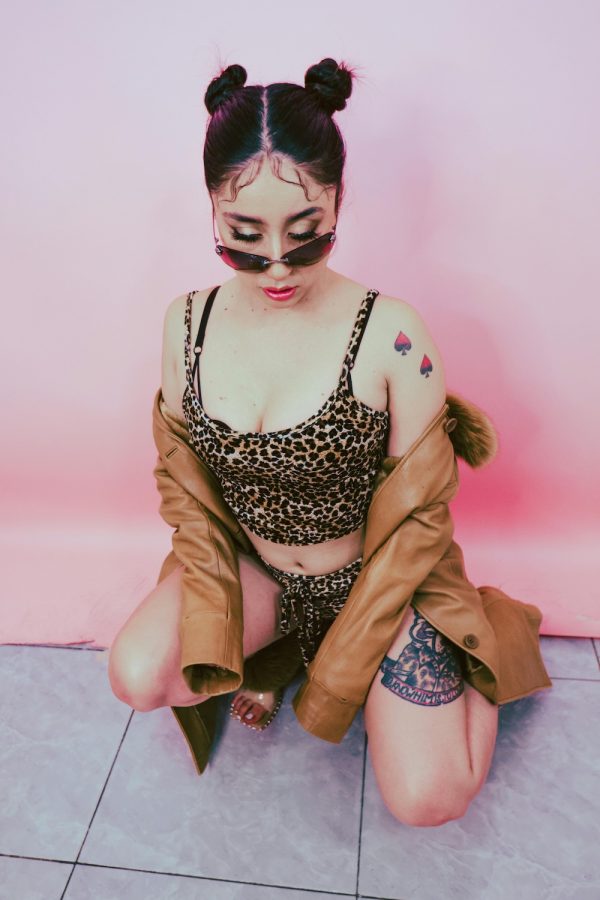
1. When people say “2016 vibes,” what does that mean to you aesthetically or emotionally?
When people say “2016 vibes” it just brings a wave of happiness over me. It was definitely one of my favorite years and immediately puts me in the 2016 headspace of being young and looking up to all of these content creators that I wanted to be so bad, and now that I’m older I’m able to live out that fantasy.
2. What’s one very specific 2016 trend you think people misremember or oversimplify?
I think people misremember how bold the makeup was in 2016. It was the era of thick dipbrows, matte lipsticks, and liquid eyeliner with a sharp cut crease.
3. Do you think 2016 was actually better, or did it just feel lighter because of where we were culturally?I feel like it seemed better, but probably wasn’t actually better overall. It definitely seemed lighter with less stress and worry in the world, which is why it ultimately seemed better. We often do find that any era other than the current one was a “simpler time,” but I bet 10 years from now we will be reminiscing about 2026 as feeling like a “better time.”
4. Why do you think creators are reaching back to 2016 right now in 2026?
I think the general public is so over the state of the world right now that reminiscing about an older era, like 2016, brings a feeling of peace and joy. Especially since 2016 is exactly 10 years ago now, it’s a way to look back and see.
5. Do you see this as nostalgia, rebellion, comfort, or something else?
I definitely see it as all three. It’s nostalgic since it was so long ago, but that feeling of nostalgia brings comfort to people. It’s also rebellious in a way because it’s making a statement of not wanting to progress futuristically and saying, “Life was better back then when we didn’t have all this new age technology and ways of life.”
 6. How does posting in a “2016 style” perform compared to hyper polished 2026 content?
I think a lot of content consumers are so over manufactured, hyper polished content because it feels fake and overdone at this point. 2016 content is just fun, and people want fun back. That’s why we are seeing a lot of this 2016 content being produced and doing so well. You can’t scroll your page anymore without seeing at least one 2016 nostalgia video.
7. Do you feel freer or more restricted posting throwback style content today?It feels freeing because throwback style content is really fun to make, but at the same time it feels like it might be the only content you can post that will do well. Trends come and go, and you just have to keep up with them to keep performing well.
8. If 2016 TikTok existed back then, what do you think creators would’ve done differently?
I think there would have been a lot more skits since Vine really popularized that. I also think there would have been more short form YouTube style videos since YouTube was in its prime in 2016.
9. What visual cues instantly signal “2016” to your audience?
The filters and music definitely give my audience that 2016 visual cue. Using the Rio De Janeiro Instagram filter or any faded Tumblr vibe filter automatically gives it the 2016 aesthetic. The music choices I use are typically popular songs from that era as well. I’ll often get comments like, “Omg I remember this song” or “This song brings back memories.”
10. Are there any 2016 trends you refuse to bring back?
I refuse to bring back high rise skinny jeans and thick dipbrow eyebrows. I will always love Y2K style in terms of low rise and skinny eyebrows. If we can incorporate that with 2016 fashion, that’s my ideal aesthetic.
11. What’s one 2016 trend you think actually deserves a serious comeback?
We need to bring back the music of 2016, messy buns, and tattoo chokers. Also having our Instagrams have a theme, like when we would all use the same filter so our feeds had an aesthetic.
12. Do you think creators felt more “themselves” online in 2016 than they do now?
It did seem like people showed more of their personalities unapologetically online in 2016, and it truly felt like creators just created to have fun.
13. Is this trend about nostalgia or about reclaiming a version of ourselves that felt less surveilled?
I feel like it brings back both. It brings back the nostalgia of that era, but that era also felt freeing. We weren’t being monitored as much online or by the government. It truly felt like the world was your oyster.
14. How do Gen Z vs Gen Alpha audiences respond to 2016 aesthetics?
This is a great question because a lot of Gen Zers were too young to fully immerse themselves in 2016 culture. Resurfacing it has allowed us to live out the 2016 fantasy we saw as children. I remember being obsessed with lifestyle YouTubers back then and wanting that lifestyle so badly. I often get comments from Gen Z viewers saying, “I remember wanting to dress like that so bad back then,” and that’s why I’m doing it now and healing my inner child. I’m honestly not sure Gen Alpha will ever fully get what it was like being a teen or preteen in 2016 and yearning for that nostalgia. I think they’re down for the vibe and still think it’s a cool aesthetic.
15. Are you creating for people who lived through 2016 or people discovering it for the first time?
My videos typically reach people who lived through 2016, and I feel like I create more for that audience so they can get that nostalgic feeling.
16. What do you think people in 2036 will be nostalgic for from right now?
I think people will be nostalgic for 2019. That was the hype beast era and a big moment for rap music. It was also the cusp year before the COVID 19 pandemic and is often seen as the last “normal” year before lockdowns changed everything.
18. If 2016 taught us anything about internet culture, what is it?I think 2016 was the year internet trends really took off. The mannequin challenge and water bottle flip were in their prime and started an era of trends we still see today.
19. Do you think this is a moment or the beginning of a longer shift toward lo fi, less curated content?
I’m hopeful it’s the beginning of a longer shift toward lo fi, less curated content, but trends come and go. I can see this one lasting a while, but not permanently changing content creation. Still, since it’s doing well and people enjoy it, I think many creators will lean into this style for now.
—————
The resurgence of the 2016 aesthetic on TikTok reflects more than a nostalgic appreciation for past fashion and visual trends. Across creator responses, a consistent theme emerged that emphasized authenticity, freedom of expression, and a longing for a time when social media felt less performative and less surveilled. While each creator experienced 2016 differently, many described the era as emotionally lighter and creatively freer, qualities that feel increasingly rare in today’s highly curated digital environment.
Rather than simply revisiting the past, this trend appears to function as a form of reclamation. Creators are not only reviving familiar aesthetics but also redefining how they want to show up online. Whether this shift toward lo fi, less curated content becomes permanent or remains a moment in time, the return of 2016 aesthetics highlights a growing desire for connection, imperfection, and joy in digital spaces. In that sense, the trend is less about going backward and more about carrying forward what once made online culture feel fun, personal, and human.