
Rich tradition. Culture. Legacy. These words describe the brand of FayWeaver. Through six generations the Qipao was a generational staple in the Fengyu family. Ms. Ying Fengyu started making Qipao, otherwise known cheongsam or form fitting Chinese dress, as it came to fruition in the early twentieth century. Based in Shanghai, the FayWeaver brand came into focus in 2021 thanks to Fengyu’s granddaughter, Wenxi Wang.
Growing up in a family with two cheongsam tailors, Wenxi Wang launched FayWeaver with style and grace and wanted to carry on her grandmother’s legacy with the Qipao. She took the line and expanded it to London, Vancouver, Paris, and New York. She wants to continue the traditions of her family and not lose touch with her roots or culture.
Beauty News NYC Official’s Robert Frezza talked to the designer about how she launched the brand, if schooling is important for placement in the fashion industry, and how she will continue her family’s legacy growing for the next generation.
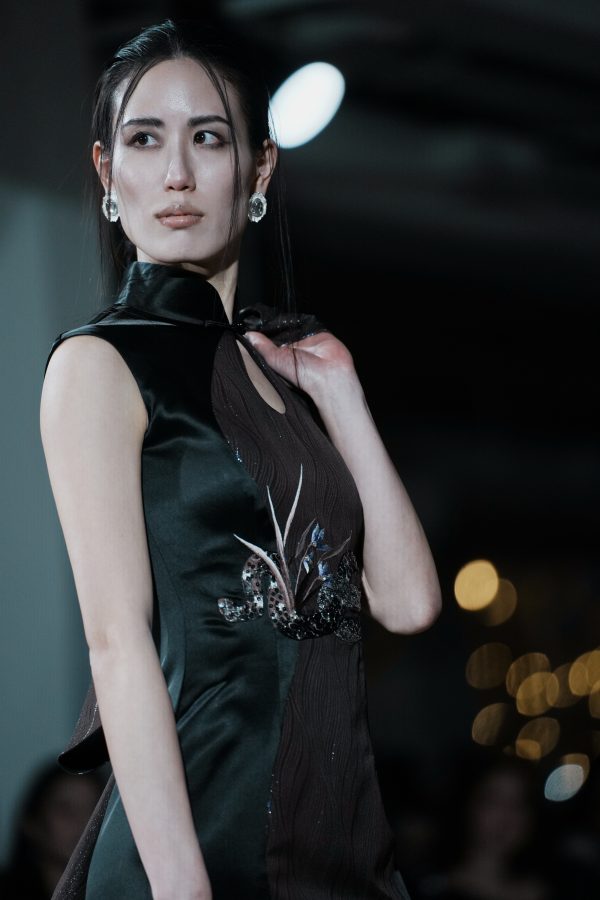
Tell me how you are carrying on the rich tradition of your family.
I was born into six generations of Qipao makers in Wenzhou, China. The Qipao — also known in the West as the cheongsam — is a form-fitting Chinese dress that emerged in the early 20th century and later became a cultural icon.
My grandmother, Ms. Ying Fengyu, built her atelier into a recognized intangible cultural heritage in our region. I grew up there — organizing fabrics by color, sketching drafts, and watching more than thirty apprentices learn under her guidance.
Before I left for Chicago, she stayed up several nights to make five Qipaos for me, each designed for a different occasion I might encounter abroad. I was too shy to wear them all, but the ones I did left a deep impression on my classmates. That was the first time I witnessed how culture could travel through clothing.
Only later did I realize that my grandmother practiced “Design Thinking” long before it became an academic term. She spoke with each client, understood her personality, lifestyle, and purpose, and only then selected fabric and style. She designed for the individual woman — not for trends.
Through FayWeaver, I carry forward that philosophy. I preserve the craftsmanship while reinterpreting silhouette, material, and context so the Qipao moves beyond stereotype and lives confidently in a contemporary wardrobe.
Heritage survives only when it evolves.
 You graduated from the Institute of Design, IIT, in Chicago. How important is schooling for a fashion designer?
At the Institute of Design — also known as the New Bauhaus — human-centered design formed the foundation of my education. We were trained to observe deeply, challenge assumptions, and design with empathy through iterative collaboration.
While studying in Chicago, I often thought of my grandmother. Without formal training, she intuitively practiced user-centered mindset decades ago.
I did not study fashion formally. My academic and consulting background in healthcare and automotive innovation gave me analytical structure, systems thinking, and the discipline to build sustainably. I later developed textile knowledge hands-on — through experimentation, industry peers, and close collaboration with my family atelier.
School gave me perspective and resilience. But leading a creative brand requires something more — conviction. As a consultant, I was trained to present multiple perspectives. As a designer and founder, I must believe in my vision strongly enough to lead and stand behind it.
That confidence cannot be taught in school.
Tell me more about what goes into the design of Qipao. What fabrics do you generally use?
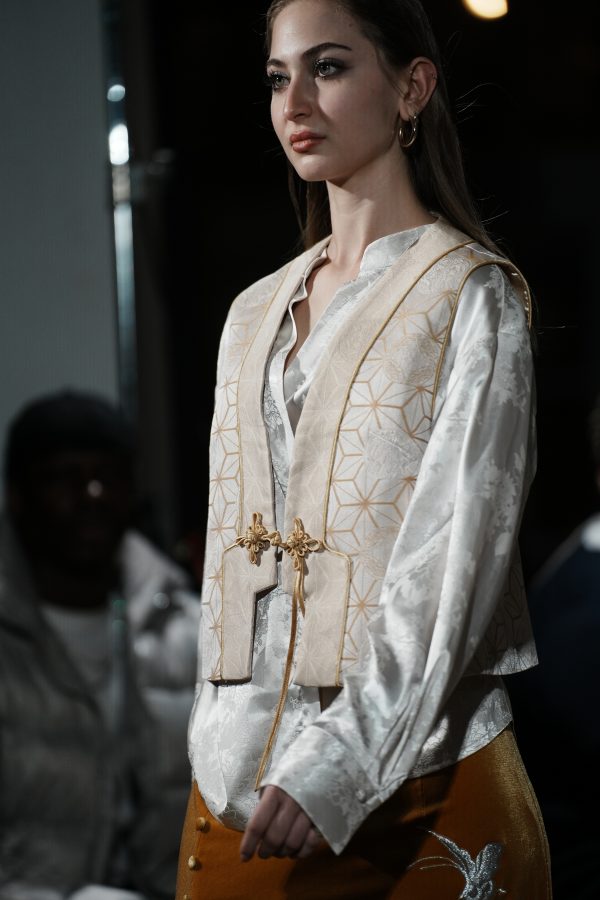
Designing a Qipao is an exercise in precision and proportion, where the collar height, shoulder slope, waist curve, slit, fine piped trim, and hand-knotted Pankou buttons must exist in careful balance. Traditionally, the garment required women to adapt to it. My approach is the opposite — the garment must adapt to a woman’s life.
I work primarily with silk, jacquard textiles, traditional Chinese brocades, and velvet — velvet being one of my favorite materials for its depth under shifting light, its harmony with embroidery, and its relative ease of care compared to more delicate fabrics.
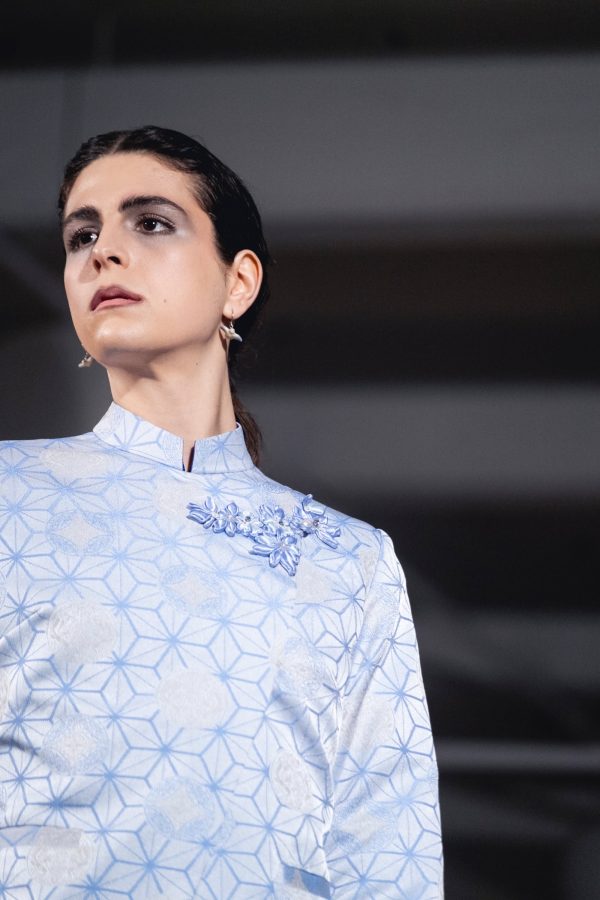
I also explore textile innovation. In 2023, we collaborated with artisans in Kyoto to develop a sustainable PET Nishijin textile, weaving recycled fibers into patterns inspired by Tang Dynasty motifs. It carries the sheen of silk while embracing environmental responsibility.
I am equally passionate about revitalizing traditional Chinese textiles for a broader audience. Gambiered Canton silk, for example, is a rare fabric made from 100% silk and dyed entirely with plant-based techniques using natural yam extracts and river mud. It is breathable, subtly textured, and environmentally responsible. We have also incorporated handwoven ramie and natural dye techniques into our living collection, extending textile heritage beyond clothing into spatial design.
For me, fabric is never just texture — it carries narrative and memory.
 What led you to launch the FayWeaver brand in 2021?
After years of studying and working in Europe and the United States, I returned to China in 2018 and found that my family atelier was gradually losing its younger clientele. The Qipao had become labeled as ceremonial or associated with an older generation.
I realized I had never truly turned back to understand my own roots. I began asking myself: I have traveled widely to understand other cultures and solve complex problems — but does innovation require leaving behind where I come from?
I felt a responsibility to reinterpret it.
FayWeaver was founded as an interweaving — which is also the meaning behind “Weaver.” It represents tradition and modernity, East and West, designer and wearer. Launching the brand was both a cultural mission and a personal reconciliation.
Your brand encompasses a global feel. Do you plan on opening brick-and-mortar shops in the States and in Europe?
The international perspective comes naturally from my life between China and the West — and it is reflected in our clients, many of whom share a similar cross-cultural sensibility and an appreciation for the dialogue between East and West, grounded in craftsmanship.
Over the past three years, we have activated in London, Vancouver, Paris, and New York — gradually reaching audiences beyond overseas Chinese communities. Through these experiences, I gained a deeper understanding of each market’s distinct sensibilities. That insight informs both our design and our service approach. Qipao customization flows like water — adapting to different contexts, body types, and personalities.
I believe tradition has roots, but it must engage diverse voices to remain alive.
I am open to physical spaces in the U.S. and Europe, but only if they function as experiential ateliers or cultural salons — places for dialogue and co-creation rather than purely transactional retail.
Your line was featured in 2025’s NYFW. Tell me what goes into a show like that.
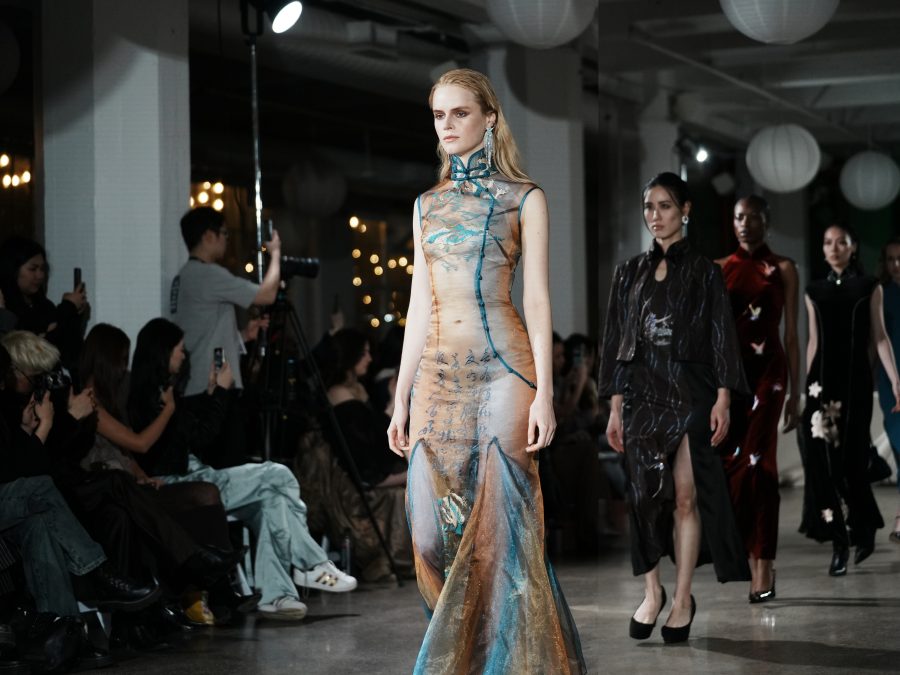
Presenting at NYFW marked the fourth year of FayWeaver. We are not a typical seasonal brand; we operate at a slower, customization-driven rhythm. Some pieces shown on the runway were from our earliest collections and remain bestsellers — proof that timeless design can transcend fashion cycles.
Preparation involved concept refinement, textile finalization, fittings, and cross-continental coordination. During the Lunar New Year holiday, when most artisans were off, my mother personally adjusted every sample to ensure the collection was ready.
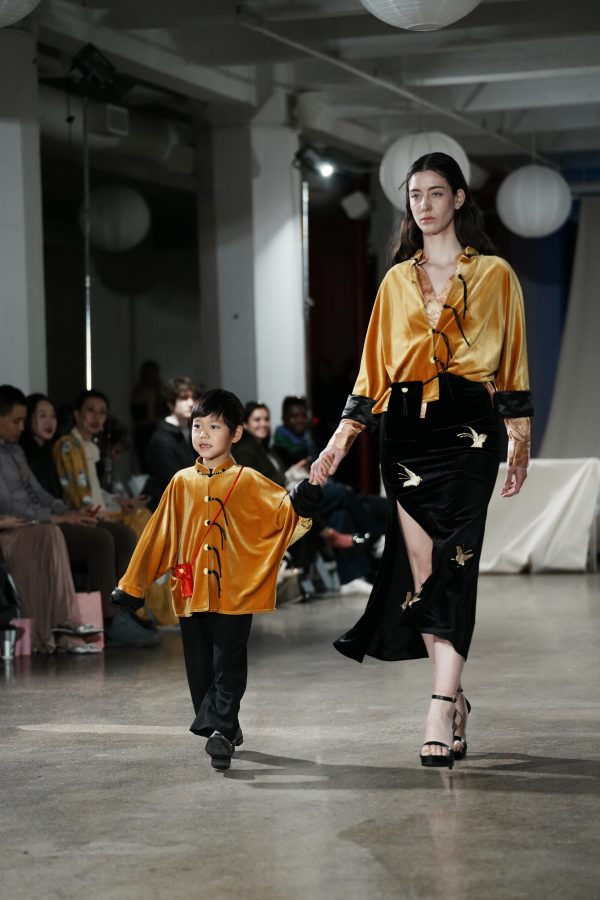
On the runway, an African American model wore our burgundy butterfly-embroidered Qipao, quietly challenging assumptions about who can embody traditional dress. Japanese model Rina wore pieces crafted with Japanese silk, which she recognized immediately. Our presentation was inclusive across gender, age, and background — from women to all genders, from adults to children, even to pets.
That diversity reflected what I hope to see: cultural garments not as fixed symbols, but as shared beauty that invites dialogue.
 What is next for you?
In 2025, we expanded into home and living during Paris Design Week with the “Linger in Bloom” collection, inspired by Zhuang Zhou’s “Dream of the Butterfly.” We blended handwoven ramie, natural dye, hand embroidery, liquid copper, and acrylic into screens, lighting, and tables.
I envision FayWeaver as more than a fashion label. It is a living aesthetic that moves from garment to space, connecting people through a shared appreciation for Eastern culture and refined craftsmanship.
We are continuing textile research and deepening co-creation — especially in bridal and ceremonial Qipao, where hand-knotted Pankou buttons and embroidery motifs are selected collaboratively to reflect personal meaning.
Another focus is integrating Qipao and Tang jackets into everyday wardrobes in versatile, contemporary ways. Increasingly, clients are mixing them with modern pieces for chic and adaptable styling.
In the long term, I envision FayWeaver becoming a global reference for modern Chinese craftsmanship. Our production model is intentionally limited and quality-driven.It relies on time, skilled hands, lifelong aftercare — including ongoing alterations and adjustments — and meaningful making.
My goal is to build something that transcends trend cycles — a living practice that connects generations, geographies, and identities.
For more on Faye Weaver’s Designs please got to https://fayweaver.net/